
Debt-to-Income (DTI) Ratio Calculator
Calculate your monthly debt-to-income ratio and check your financial health instantly.
Lenders view your debt level as healthy and manageable. You have high loan approval chances.
Calculate your debt-to-income ratio online for free. Check your DTI percentage in ₹ or $ and see if you qualify for home loans, personal loans, or mortgages
What is a Debt-to-Income (DTI) Ratio?
Your Debt-to-Income (DTI) Ratio is a critical financial metric that compares your total monthly debt payments against your gross monthly income (your earnings before taxes and deductions).
Expressed as a percentage, your DTI ratio shows lenders how much of your monthly earnings go toward paying off existing loans, credit cards, and mortgages.
Using our free Debt-to-Income (DTI) Ratio Calculator, you can instantly check your financial health and see if you qualify for new loans, mortgages, or credit line increases
Why is Your DTI Ratio Important?
Financial institutions and banks use your DTI ratio to evaluate your ability to manage monthly payments and handle additional debt responsibly.
- Loan & Mortgage Approval: Lenders set strict DTI limits. If your ratio is too high, banks may reject your loan application—even if you have a good credit score.
- Better Interest Rates: A lower DTI ratio signals lower risk to lenders, helping you secure lower interest rates and better loan terms.
- Personal Budgeting: Knowing your DTI ratio helps you realize whether you are living within your financial limits or taking on too much debt.
How to Calculate Debt-to-Income Ratio (DTI Formula)
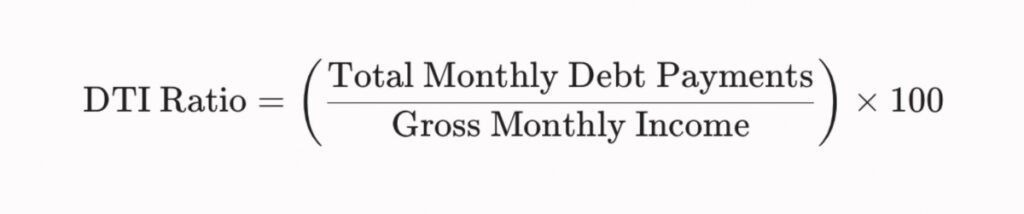
The math behind calculating your DTI ratio is straightforward:
DTI Ratio (%) = (Total Monthly Debt Payments ÷ Gross Monthly Income) × 100
What to Include in Monthly Debt:
- Home loan / Mortgage EMIs
- Personal loan & auto loan payments
- Credit card minimum monthly payments
- Student loan EMIs
- Any other recurring monthly loan commitments
(Note: Do not include daily living expenses like groceries, utilities, internet bills, or entertainment.)
What to Include in Gross Monthly Income:
- Base salary/wages (before tax)
- Freelance or business income
- Bonuses, commissions, or tips
- Rental property income
- Pension or alimony payouts
What is a Good Debt-to-Income Ratio?
Lenders generally divide DTI ratios into three risk categories:
- 35% or Less (Good / Healthy): Your debt level is in great shape. You have plenty of extra cash flow each month, making you a top candidate for personal loans and mortgages.
- 36% to 49% (Manageable / Caution): You have a moderate amount of debt. While you can still qualify for loans, lenders may require additional documentation or proof of assets.
- 50% or More (High Risk / Warning): Half (or more) of your monthly income goes toward paying off debt. Most banks will hesitate or decline to approve new credit until you pay down existing balances.
Example of DTI Calculation
Suppose your total Gross Monthly Income is ₹60,000 (or $6,000) and your monthly debt payments look like this:
- Home Loan EMI: ₹15,000
- Personal Loan EMI: ₹5,000 Credit
- Card Payment: ₹4,000
- Total Monthly Debt = ₹24,000
Calculation: (₹24,000 ÷ ₹60,000) × 100 = 40% DTI Ratio In this scenario, your DTI ratio falls in the Manageable category
How to Lower Your DTI Ratio Quickly
If your DTI ratio is above 43% and you plan to apply for a major loan, here are three proven ways to lower it:
- Avoid Taking New Debt: Stop using credit cards for non-essential purchases and postpone applying for new personal loans.
- Pay Off High-Interest Small Debts: Use the Snowball Method to clear smaller debt balances first. Eliminating even one monthly EMI quickly drops your overall ratio.
- Increase Your Gross Income: Take on freelance projects, side hustles, or ask for a salary raise to increase the income side of the equation.